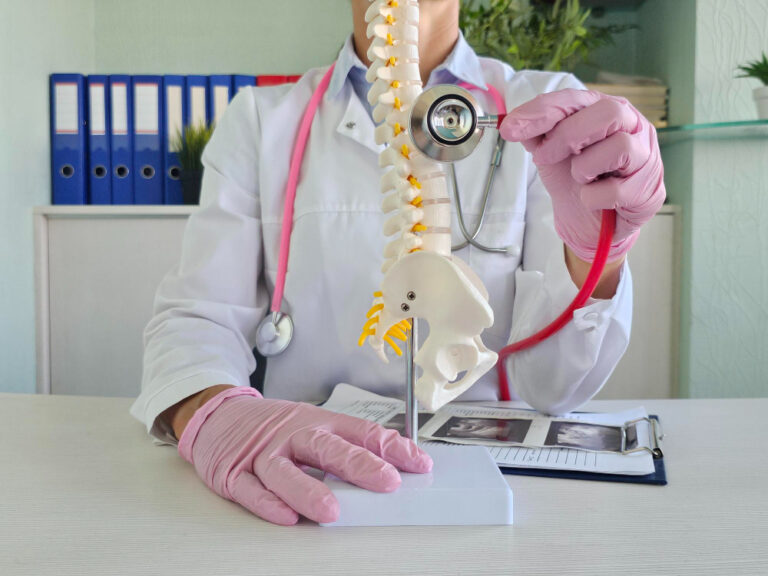



The lower back pain it is one of the most frequent discomforts in the adult population. In many cases, it appears occasionally and improves with relative rest, physical therapy, or medical treatment. However, when the pain persists over time, radiates to the leg, or limits daily life, it may be advisable to go to a Spine specialist to assess the origin of the problem.
When does lower back pain stop being “normal”?
Not all back pain indicates a serious injury, but there are some signs that should not be ignored. Lower back pain that lasts several weeks, progressively worsens, or appears along with other symptoms may require a more precise medical evaluation.
It is also important to consult if the pain prevents normal walking, affects rest, limits work, or does not improve despite conservative treatment.
Symptoms that may require evaluation
Is it advisable to see a specialist if your lower back pain is accompanied by:
- Sciatica pain radiating to the buttock, leg, or foot.
- Tingling, numbness, or loss of sensation.
- Loss of strength in one leg.
- Difficulty walking or standing.
- Pain that does not improve with physical therapy, medication, or relative rest.
- Recurring episodes of intense low back pain.
These symptoms may be related to pathologies such as lumbar herniated disc, spinal canal stenosis, nerve compression or degenerative spinal conditions.
What does a spine specialist check?
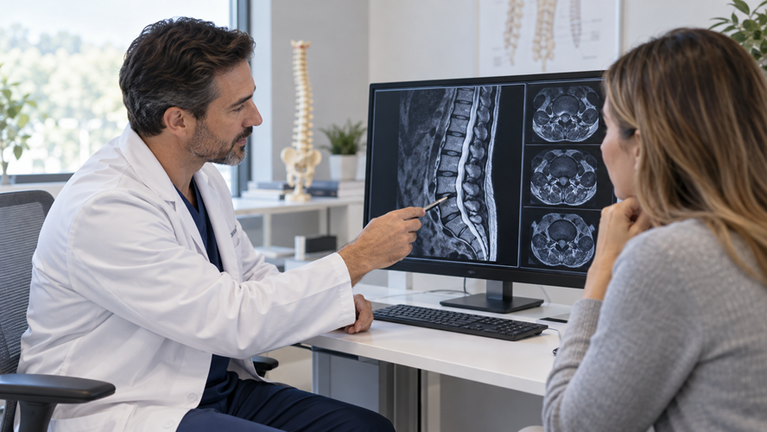
During the consultation, the specialist evaluates the symptoms, the progression of the pain, the treatments performed, and the available tests, such as MRI, X-rays, or CT scans.
The goal is to correlate what the patient feels with what the tests show. This is important because not all abnormalities seen on an MRI require surgical treatment. In many cases, the key is to correctly interpret whether that lesion actually explains the symptoms.

Does lower back pain mean surgery?
Not necessarily. Consulting a spine specialist does not mean the patient will need surgery. In fact, many cases can be managed with conservative treatment, physical therapy, medication, injections, or monitoring.
Surgery is only considered when there is a clear indication, especially if there is nerve compression, loss of strength, incapacitating pain, or failure of other treatments.
Minimally invasive spine techniques
In selected patients, there are techniques such as Endoscopic spine surgery, which allow for the treatment of certain pathologies through small incisions and high-precision endoscopic vision.
This type of approach can be valuable in some cases of lumbar disc herniation, spinal stenosis, or nerve compression, always after an individualized assessment.
Conclusion
Persistent lower back pain should not be normalized when it affects mobility, rest, or quality of life. Consult with a Neurosurgeon specializing in spine can help get a clearer diagnosis, understand the available options, and decide on the most appropriate treatment in each case.
If you have lower back pain, sciatica, or questions about your medical tests, requesting a specialized evaluation can be the first step toward making more confident decisions.