



Anterior Lumbar Interbody Fusion
What does this technique consist of?
The ALIF it's an approach to lumbar spine surgery that allows access to the intervertebral disc from the front of the abdomen, without entering directly through the posterior back muscles.
This type of technique can be valued in certain cases of Lumbar degenerative pathology, disc height loss, vertebral instability need for lumbar segment reconstruction.
The ALIF approach It can be especially useful when it is necessary to restore the intervertebral disc height, improve the lumbar segment alignment or favor one anterior column reconstruction. When accessed from the front, it allows working on the disc space from an approach other than conventional posterior surgery.
However, not all patients are candidates for this technique. Before recommending a ALIF It is necessary to study the vascular anatomy, the affected level, the Spinal stability and the relationship between the symptoms of the patient and the imaging tests.
The indication should always be made after a personalized valuation, reviewing the symptoms, the imaging tests and the anatomical features of each patient.
XLIF: Lateral Approach to the Spine
What does this technique consist of?
The XLIF allows access to the lumbar spine from the side of the body. It is a approach minimally invasive that can be used in selected cases to treat certain degenerative changes the problems of Column alignment.
This access can help reduce direct manipulation of the Posterior musculature, although not all patients are candidates. The choice depends on affected level, the patient anatomy and the purpose of the surgery.
The XLIF can be part of a surgical strategy in patients with degenerative pathology, Disc height loss or certain problems of alignment. Its purpose is to allow access to lumbar disc space from a lateral approach, adapting the surgery to the specific patient needs.
Your request requires a careful planning, since the patient anatomy, the affected lumbar level and the relationship with Nervous structures are key factors in deciding if this approach is suitable.
XLIF clinical case
Degenerative lumbar scoliosis
XLIF treatment
Correction of deformity with minimally invasive lateral surgery.
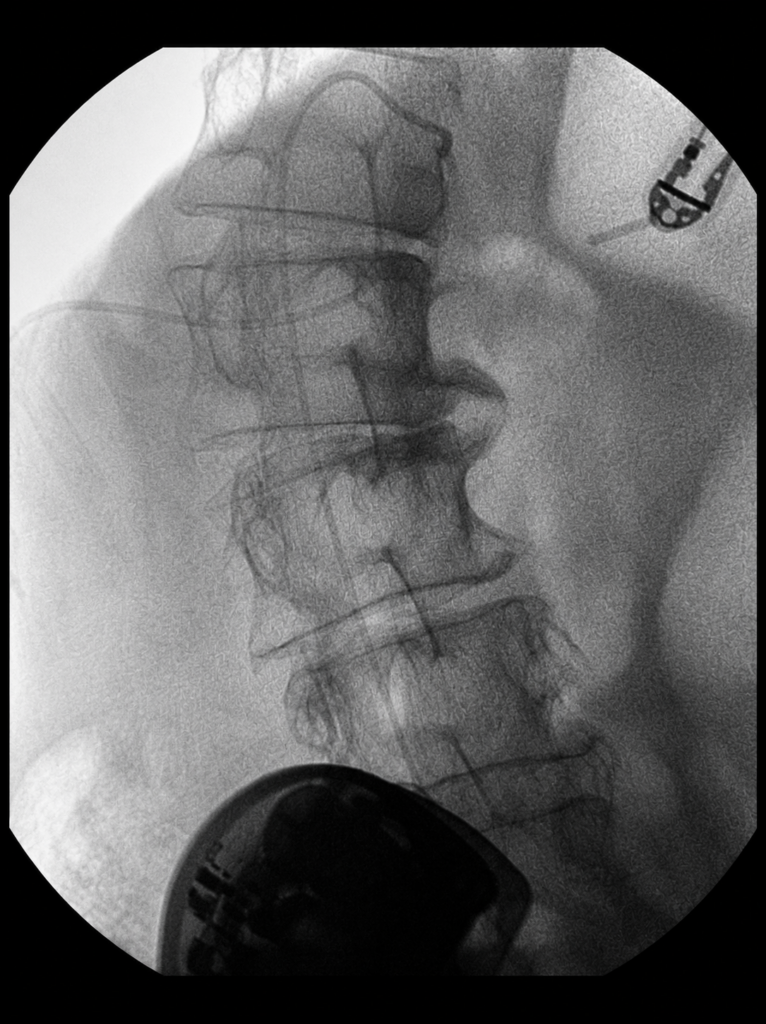
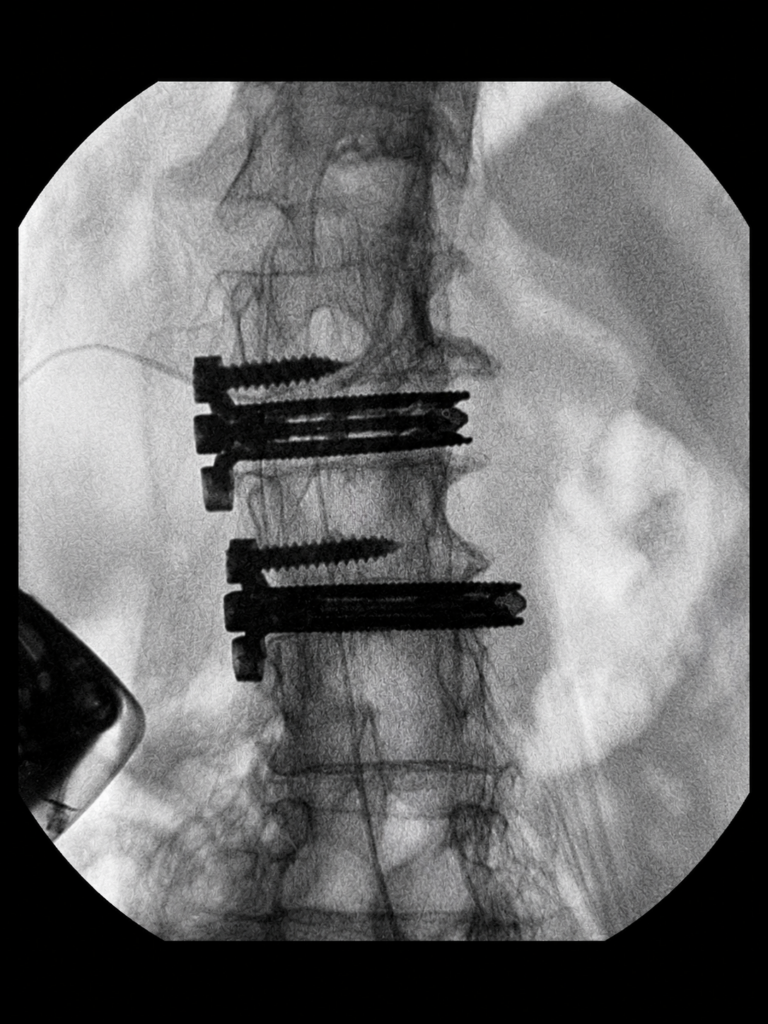
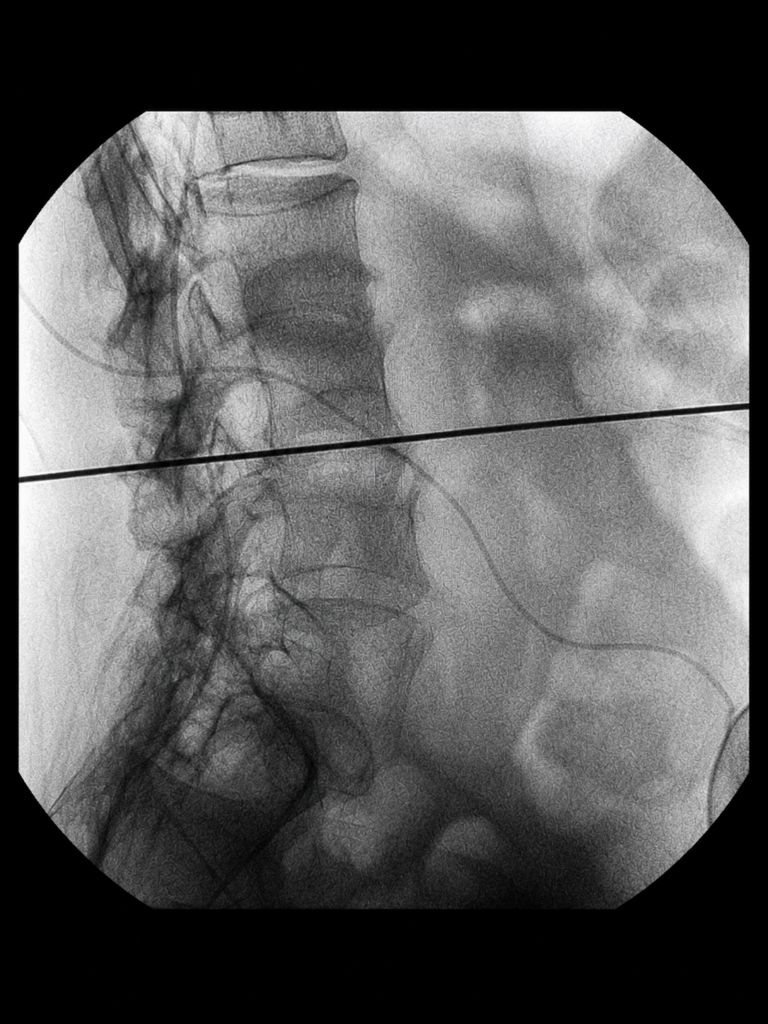
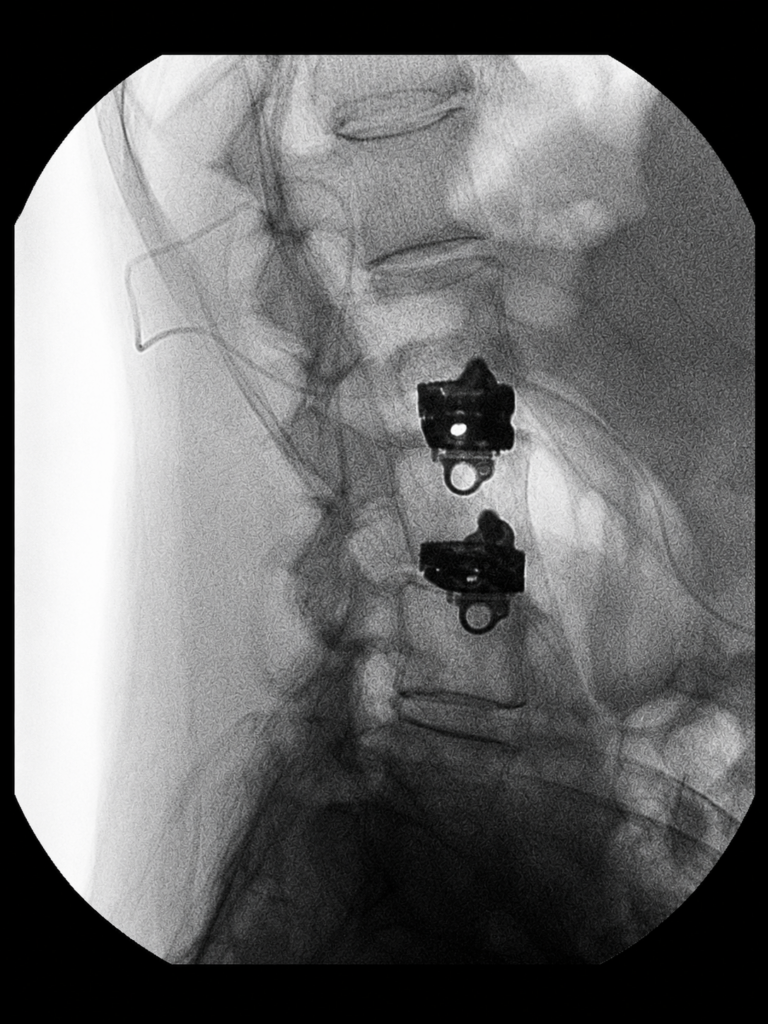
Patient with Degenerative lumbar scoliosis treated by Doctor Arteaga through XLIF (Extreme Lateral Interbody Fusion) technique.
The Lateral approach allowed restore intervertebral disc height, correct the deformity y Improve lumbar alignment through a minimally invasive technique. The images show the comparison between the preoperative study and the Postoperative outcome.
- XLIF technique.
- Minimally invasive surgery.
- Lumbar alignment correction.
- Disc height restoration.
LLIF: Lateral lumbar approach
What does this technique consist of?
The LLIF it is a lateral approach to the spine that allows access to the lumbar disc space through a lateral approach. It can be part of the surgical planning in cases of degenerative pathology, lumbar deformity o disc height loss.
As with others minimally invasive approaches, its indication depends on specific characteristics of each patient and of the intervention objectives.
In some patients, this approach helps restore the Disk height and to improve the relationship between the vertebrae when it exists advanced degeneration the alteration of the Column alignment. It can also be used within surgeries for reconstruction o Column stabilization.
As with the rest of the lateral approaches, it is essential select the patient carefully. The indication depends on the location of the problem, the Individual anatomy, the imaging tests and the purpose of the surgery.
Before proposing a LLIF, it is necessary to assess whether this access route allows treating the cause of the problem in a safe and effective. To this end, we study the affected lumbar level, the relationship with Nervous structures and the global alignment of the spine, always within a custom planning.
OLIF: Oblique Lumbar Approach
What does this technique consist of?
The OLIF it is a anterolateral oblique approach that allows access to the column from an alternative route to the conventional posterior surgery.
It can be valued in certain cases of degenerative pathology, alterations of the Lumbar alignment or surgeries that require a more complex reconstruction of the spine.
The OLIF allows access to the column through a oblique path, located between the anterior and lateral approach. This technique may be useful in certain cases where the goal is to treat the lower back disco or improve the alignment without performing a wide posterior approach.
Its main advantage is that it allows surgical planning from a different approach, adapting the access to the type of injury And at real patient needs.
The preoperative planning it is especially important to assess whether this access route is safe and appropriate. To this end, we review imaging tests, the arrangement of the Vascular and nervous structures, and the concrete needs of reconstruction o stabilization.
Before indicating a OLIF, it is necessary to study individually the affected level, the patient anatomy and the intervention objective. In this way, it is possible to assess whether this approach offers a suitable option within a Personalized surgical planning.
OLIF Clinical Case
Degenerative lumbar scoliosis
OLIF treatment
Correction of deformity through minimally invasive oblique surgery.
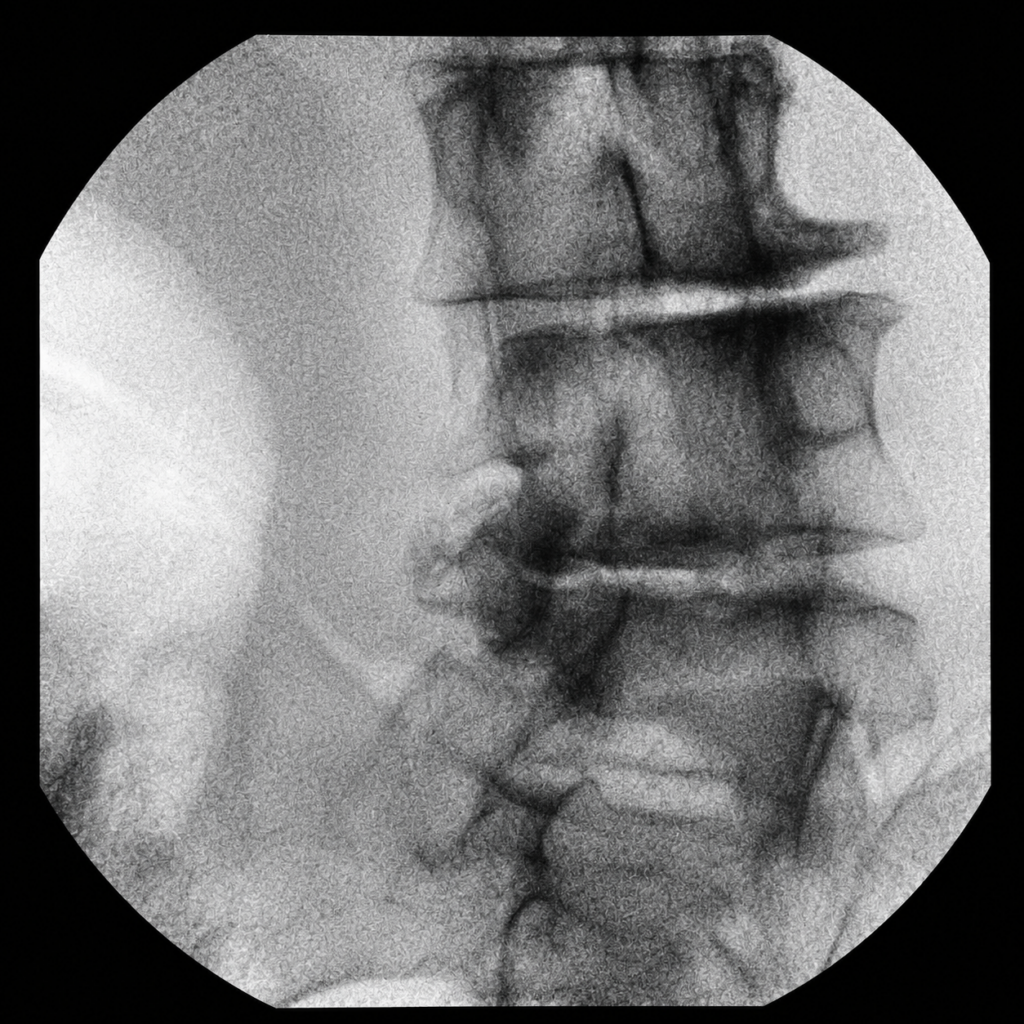
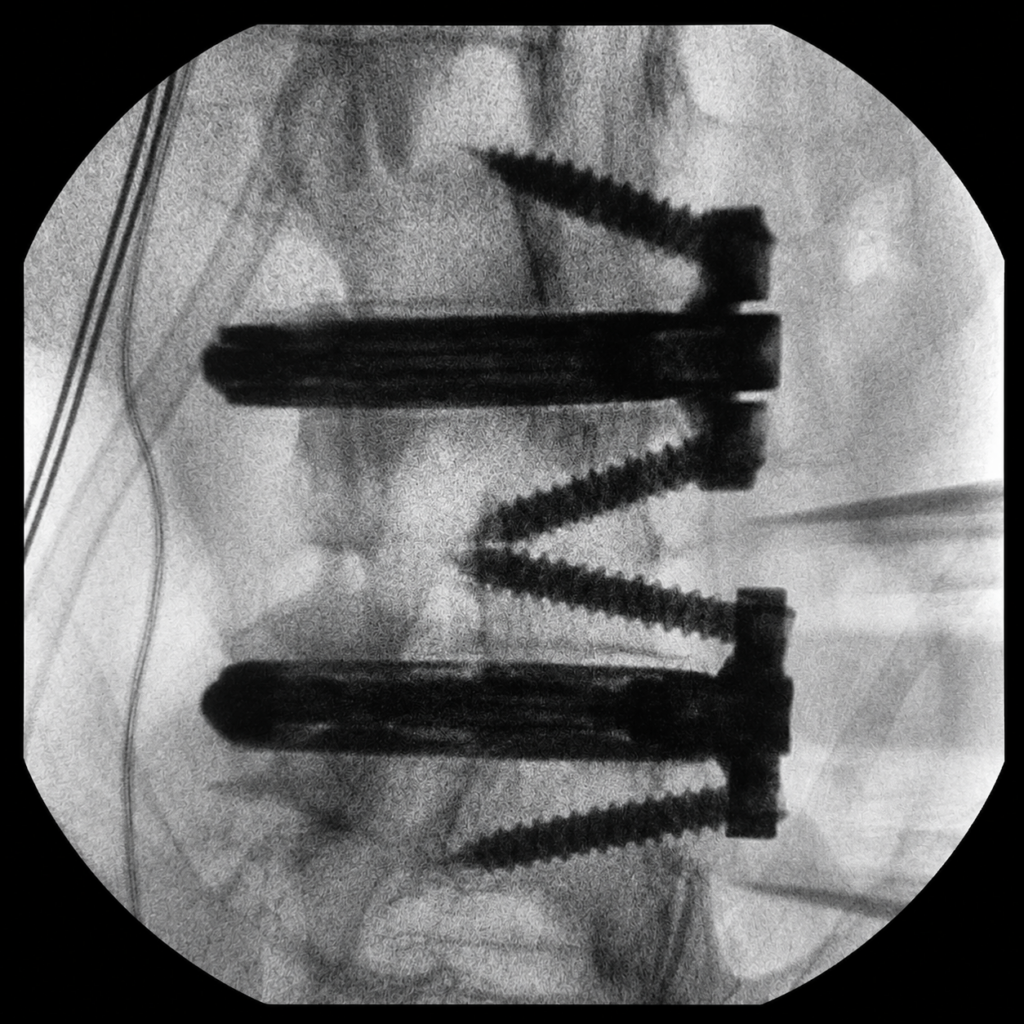
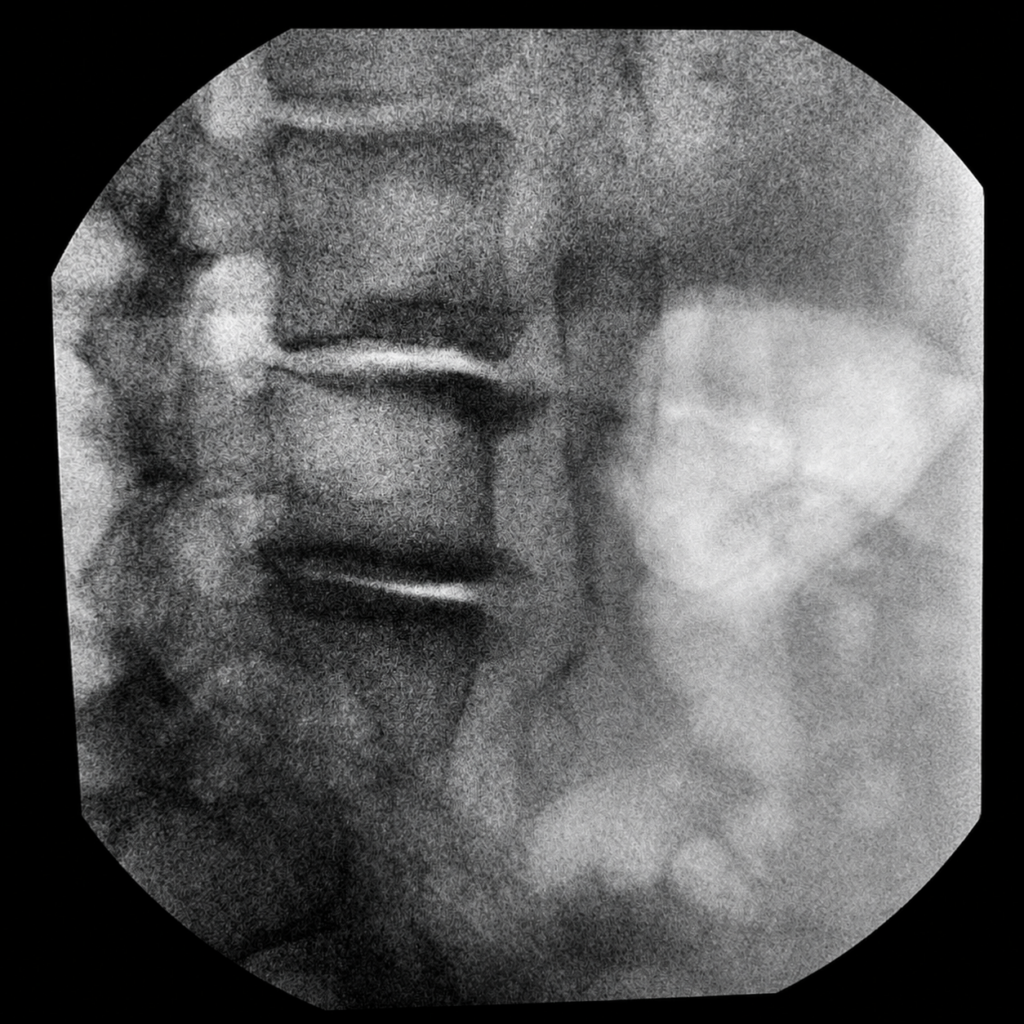
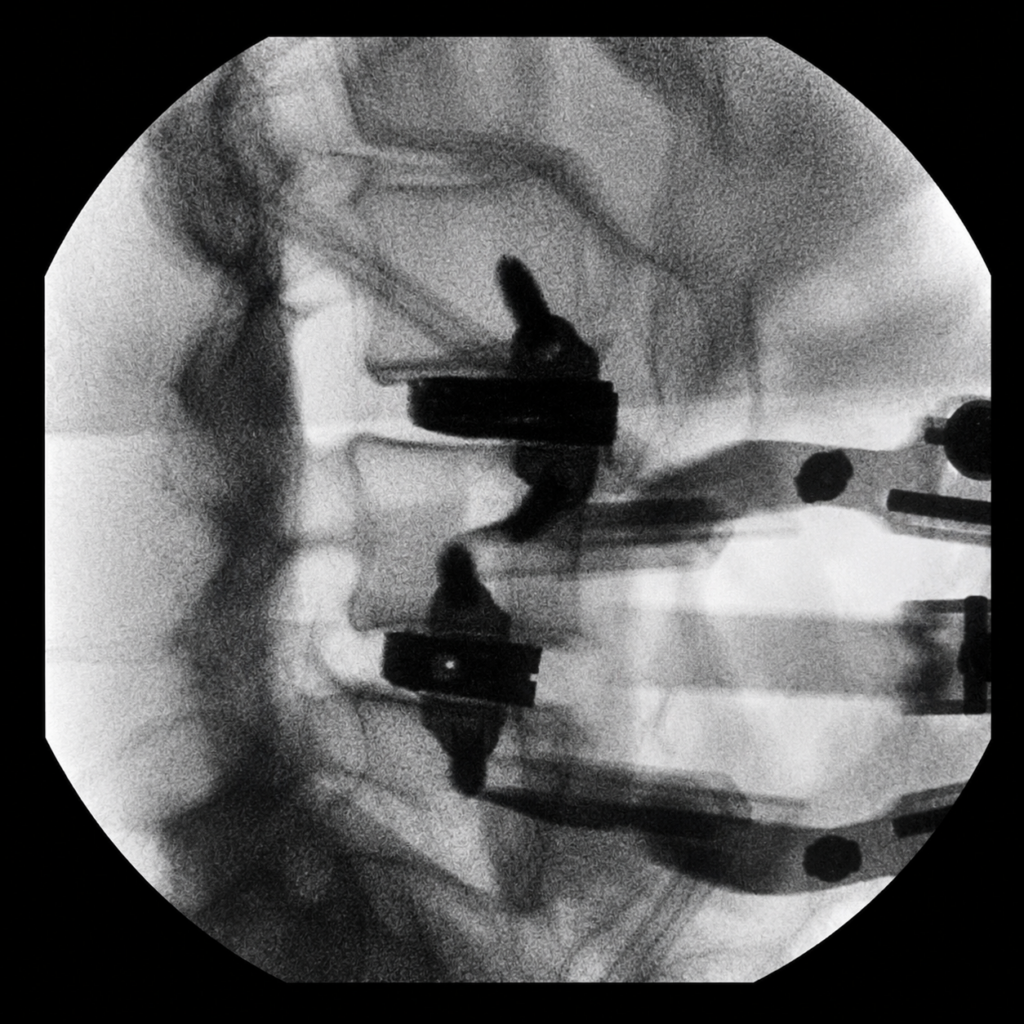
Patient with Degenerative lumbar scoliosis treated by Dr. Arteaga through the OLIF (Oblique Lumbar Interbody Fusion) technique.
The oblique approach allowed access to the column through the anatomical space between the psoas muscle and great vessels, restoring the Disc height, correcting the deformity and improving the Lumbar alignment through a minimally invasive technique.
The images show the comparison between the preoperative study and the Postoperative outcome.
- OLIF Technique.
- Minimally invasive surgery.
- Lumbar alignment correction.
- Disc height restoration.
When are these approaches valued?
The approaches anterior and lateral spinal columns can be valued in patients with:
- Lumbar degenerative pathology.
- Vertebral instability.
- Intervertebral disc height loss.
- Lumbar alignment changes.
- Lower Back Pain associated with structural changes.
- Complex spine cases that require a Advanced surgical planning.
These approaches are usually part of a Advanced surgical planning. They are indicated not only by the name of the injury, but by the relationship between that injury and the patient symptoms.
For example, two patients may have a lumbar degeneration similar in an MRI, but needing different treatments depending on the pain, the Mobility, the Spinal stability, the presence of sciatica or the impact on their daily lives.
For this reason, the specialized valuation is fundamental before deciding if surgery is necessary and what type of approach might be most suitable.
The decision does not depend solely on the diagnosis, but also of the general condition of the patient, sus symptoms, the imaging tests and the intervention objectives.
Personalized Planning for Spinal Surgery
In Spine surgery, as important as technique is knowing when to use it. Therefore, before indicating an approach like ALIF, XLIF, LLIF, and OLIF, it is necessary to study the case in detail and explain to the patient which option makes the most sense.
The choice of surgical approach is carried out after studying each case individually. For this, the patient symptoms, the clinical exploration, the imaging tests and the previously performed treatments.
It is also valued if there is nerve compression, instability, deformity, Disc height loss or one Previous surgery that can condition planning.
The goal is to choose the most appropriate approach to address the cause of the problem, reduce the Surgical aggression when possible and favor a tailored recovery.
In addition, a proper planning allows explaining to the patient what is expected to be achieved with the intervention, what alternatives exist, and why one technique may be more appropriate than another according to their specific situation.
Frequently Asked Questions
What is an ALIF approach in the lumbar spine?
The ALIF It is an anterior approach to the lumbar spine. It allows access to the intervertebral disc from the front of the abdomen, avoiding direct entry through the back muscles.
What is the difference between ALIF, XLIF, LLIF, and OLIF?
The main difference is in the access route. The ALIF access it from the front, the XLIF and the LLIF from a side road, and the OLIF from an anterolateral oblique approach.
Are these approaches minimally invasive?
are techniques that seek Reduce aggression on specific tissues compared to broader approaches, but they should be indicated only when the case warrants it.
Can all patients undergo ALIF, XLIF, LLIF, or OLIF surgery?
No. Each approach has specific indications. To determine whether a patient is a candidate, It is necessary to assess symptoms, imaging tests, and anatomical features.
When can seeking a second opinion be helpful?
Order one second opinion, it can be useful if you have been recommended a spine surgery, you have doubts about the proposed approach or want to evaluate if there are minimally invasive options for your case.
- Schedule your appointment now
Contact
If you have lower back pain, sciatica, a herniated disc, spinal stenosis, or questions about potential endoscopic spine surgery, you can send us your inquiry through the form.
Dr. Arteaga's team will receive your message and can guide you on the next steps to evaluate your case.