



★★★★★ 4,5 · 26 Google reviews
Cervical hernia
A cervical hernia occurs when a neck disc moves and presses on a nerve or the spinal cord. Many improve without surgery. When this is not the case, or when there are warning signs, I explain what surgery you need and why.
How does it feel?
- Neck pain that radiates down the shoulder, arm, or hand (brachialgia).
- Numbness or tingling in some fingers.
- Loss of strength: things fall off or it is difficult to button up.
- If the hernia presses on the spinal cord: clumsiness in the hands, instability when walking.
Warning signs
Request urgent evaluation if you notice progressive clumsiness in your hands, difficulty walking, loss of strength that gets worse, or problems controlling your urine. These may indicate that the spinal cord is compressed (cervical canal stenosis).
When is surgery necessary?
- The pain in the arm remains intense after 6 to 8 weeks.
- Loss of strength in the arm or hand.
- The MRI shows compression of the spinal cord with symptoms.
How to operate a cervical hernia
I choose the technique based on where the hernia is and how the neck is.
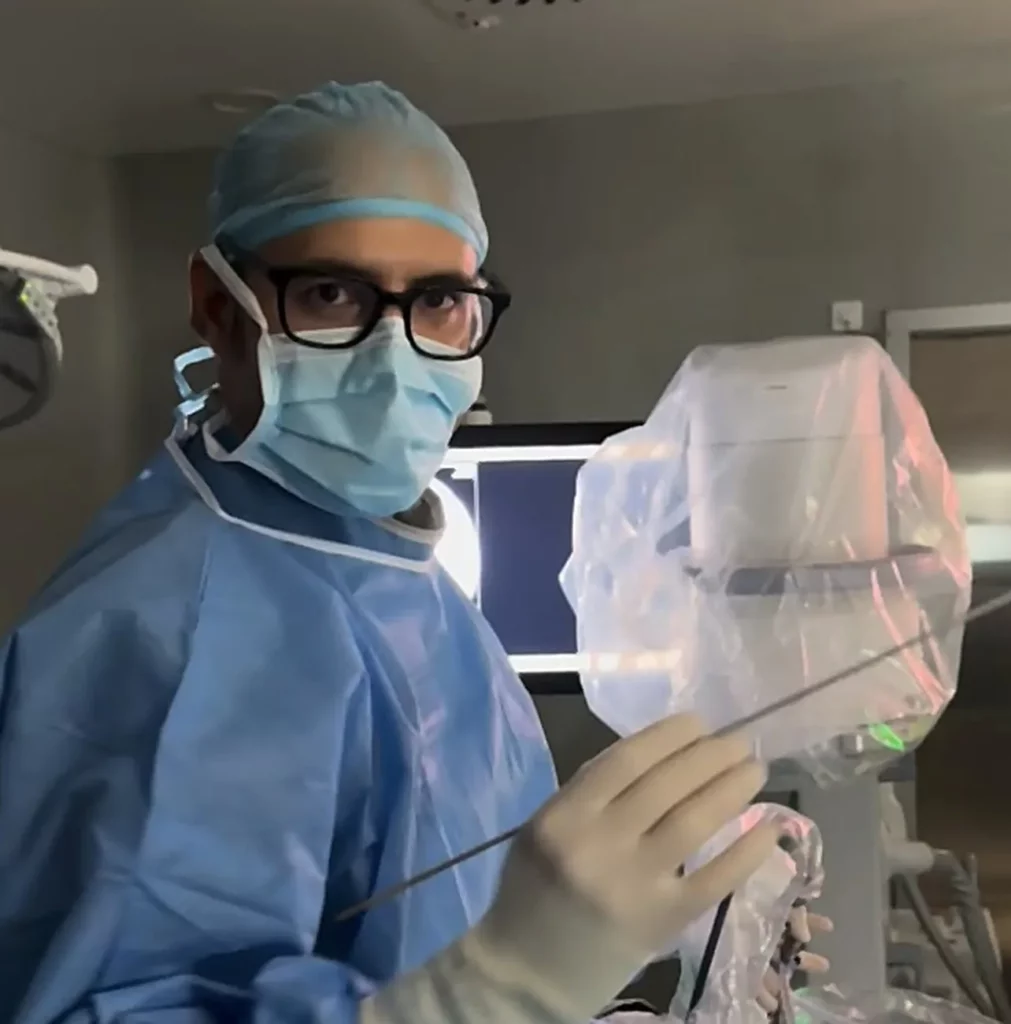
- Ahead of the neck (anterior cervical discotomy): I remove the disc through a small incision in a fold of the neck and place an implant to maintain the height (arthrodesis) or a disc prosthesis that preserves movement.
- Behind (posterior foraminotomy, sometimes) endoscopic): It releases the nerve root without removing the entire disc when the hernia is on one side.
Generally the admission is for 24 hours. You can walk the same day.
Questions
Frequently asked questions
How long is the recovery?
It depends on the technique. Most patients return to light activity within a few days. I determine the exact date for returning to work and sports during the consultation.
What are the risks?
They are rare but real: discomfort when swallowing or temporary hoarseness (in the upper airway), infection, bleeding, injury to the nerve root or the spinal cord, and, in the long term, degeneration of the adjacent disc. Before operating, I explain what applies to your case.
What evidence do I bring?
The cervical magnetic resonance imaging (images and report) and, if you have them, reports from electromyography or from other doctors.
Content reviewed by Dr. Francisco Arteaga, neurosurgeon (medical registration no. 413507296). Last reviewed: October 2026.
Book your appointment
or call 614 708 664
If you have a cervical hernia and want to know if you need surgery or if you can have it operated on minimally invasive surgery, You can write to us via WhatsApp, call us, or tell us about your case. «Evaluate my case». If they have already proposed an operation, you can also request one. second opinion.
We will review your message and advise you on the next steps to assess your case.