


If you have been recommended to have spine surgery, it is normal to have doubts. Is the surgery really necessary? Are there other options? What happens if I decide to wait? Requesting an appointment second opinion for a spinal surgery It helps you to solve these questions, to know the alternatives and to decide with more tranquility.
It’s not about being suspicious of the first diagnosis. It’s about having all the information before an intervention that can affect your health and your quality of life.
Why is a second opinion important before having a spine surgery?
The spine protects the spinal cord and allows us to perform almost all of our movements. It is a complex structure, and deciding whether surgery is necessary requires evaluating each case individually.
Problems such as the hernia of the disc, canal stenosis or sciatica They can cause a lot of pain and limit daily activities. However, not all people who suffer from them need surgery.
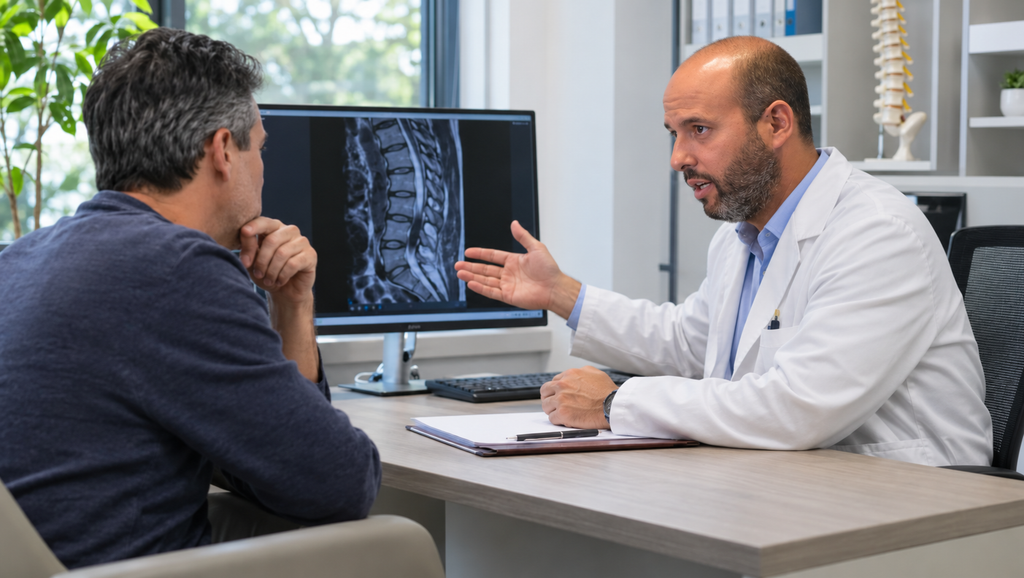
A second evaluation allows you to review the diagnosis, re-interpret the imaging tests, and check whether your symptoms correspond to what they show. It also helps you understand the treatment options, with their benefits and risks. Sometimes it confirms the need for surgery; other times it reveals alternatives that had not been considered.
In what situations is it advisable to seek a second opinion?
Each patient is different, but there are situations in which it is advisable to consult with another doctor. neurosurgeon specialising in the spine It is especially useful.
1. You have been advised to have surgery, but you are not sure about it
If you have been advised on an intervention and you do not fully understand why you need it, another assessment can help you understand your situation. It is important to know what problem the surgery aims to solve, what the realistic results are, and what complications may arise.
An informed decision begins with Understanding the diagnosis and The goal of the treatment.
2. The pain does not improve with treatments
The lower back or neck pain It can last for weeks or months and affect your rest, work, and daily activities. If you have tried physiotherapy, medication, or injections and the improvement is not enough, it may be a good time to review your case.
The specialist will assess whether there is a cause that would benefit from intervention or whether it still makes sense to continue with one. conservative treatment.
3. You have been offered a complex surgery
Some operations, especially those that require stabilize or fuse the vertebrae, They need more elaborate planning. A second opinion serves to analyze whether intervention is necessary, how far it should go, and what techniques exist.
It also allows you to check if there are less invasive procedures suitable for your specific problem.
4. The tests and symptoms do not match
A magnetic resonance imaging It can show hernias, wear and tear, or narrowing that does not always explain the discomfort. Finding a hernia does not mean it is the cause of your pain or that you need to have it operated on.
That is why it is essential to relate the images to neurological examination, the symptoms and the clinical evolution.
5. You have already had surgery and you are still experiencing discomfort
If after a spinal surgery If pain persists or new limitations appear, a specialist assessment can help to find out what is happening.
This does not necessarily mean that the operation has failed, nor that you have to return to the operating room. The specialist will review the progress, tests, and treatments performed before proposing any options.
What can a spinal surgeon specialized in the spine offer you?
One pProfessional with specific experience in spine pathology It performs a detailed evaluation to determine which treatment suits you best. This evaluation usually includes:
- Clinical history: how the pain has evolved, what other symptoms you have and what treatments you have followed.
- Neurological exploration: strength, sensitivity, reflexes and possible signs of nervous impairment.
- Review of evidence: analysis of resonance scans, X-rays or tomographs, when indicated.
- Treatment alternatives: both conservative and surgical options.
- Individualized plan: a clear explanation of the expected benefits, the risks, and the recovery period.
The goal is not to propose a different intervention per system, but to determine which option offers the best balance between benefits and risks in your case.
Can a second opinion prevent a spinal surgery?
In some cases, yes. There are pathologies that improve with Non-surgical treatments, Especially when there are no signs of significant neurological impairment. Depending on the diagnosis, rehabilitation, therapeutic exercise, medication, or injections may be considered.
Other times, the spinal surgery It is the best option: when there is relevant nerve compression, a progressive loss of function or incapacitating symptoms that do not respond to other treatments.
Therefore, the second opinion is not a way to find arguments to avoid the operation, but an opportunity to confirm whether you really need it.
When is it not advisable to wait?
Asking for another opinion is reasonable in many situations, but there are symptoms that require it. Emergency medical care:
- Recent loss of control over the bladder or the intestines.
- New difficulty urinating.
- Loss of sensitivity in the genital or perineal area.
- Intense weakness in the legs, or that gets worse quickly.
They can indicate a serious neurological compression. If they appear, go to the emergency room without waiting for a scheduled appointment.
What questions are worth asking before deciding to have surgery?
To bring some along prepared questions it will help you to make the most of the consultation:
- What is the specific cause of my symptoms?
- Is surgery essential or are there other alternatives?
- What benefits can I expect from the intervention?
- What risks are there in having the surgery and what are the risks of not having it?
- Am I a candidate for endoscopic or minimally invasive spine surgery?
- How will the recovery be and what limitations will I have?
We recommend that you bring your imaging tests, medical reports, and a summary of the treatments you have already tried.

Second opinion on spine surgery in Seville with Dr. Francisco Arteaga
Deciding whether to have spine surgery requires a good understanding of the diagnosis, the alternatives, and the results you can expect.
Have they recommended you have spine surgery and you want to resolve your doubts? Request a consultation with Dr. Arteaga and You receive a specialized assessment to make decisions with information and confidence.